Stretch marks: questions patients ask
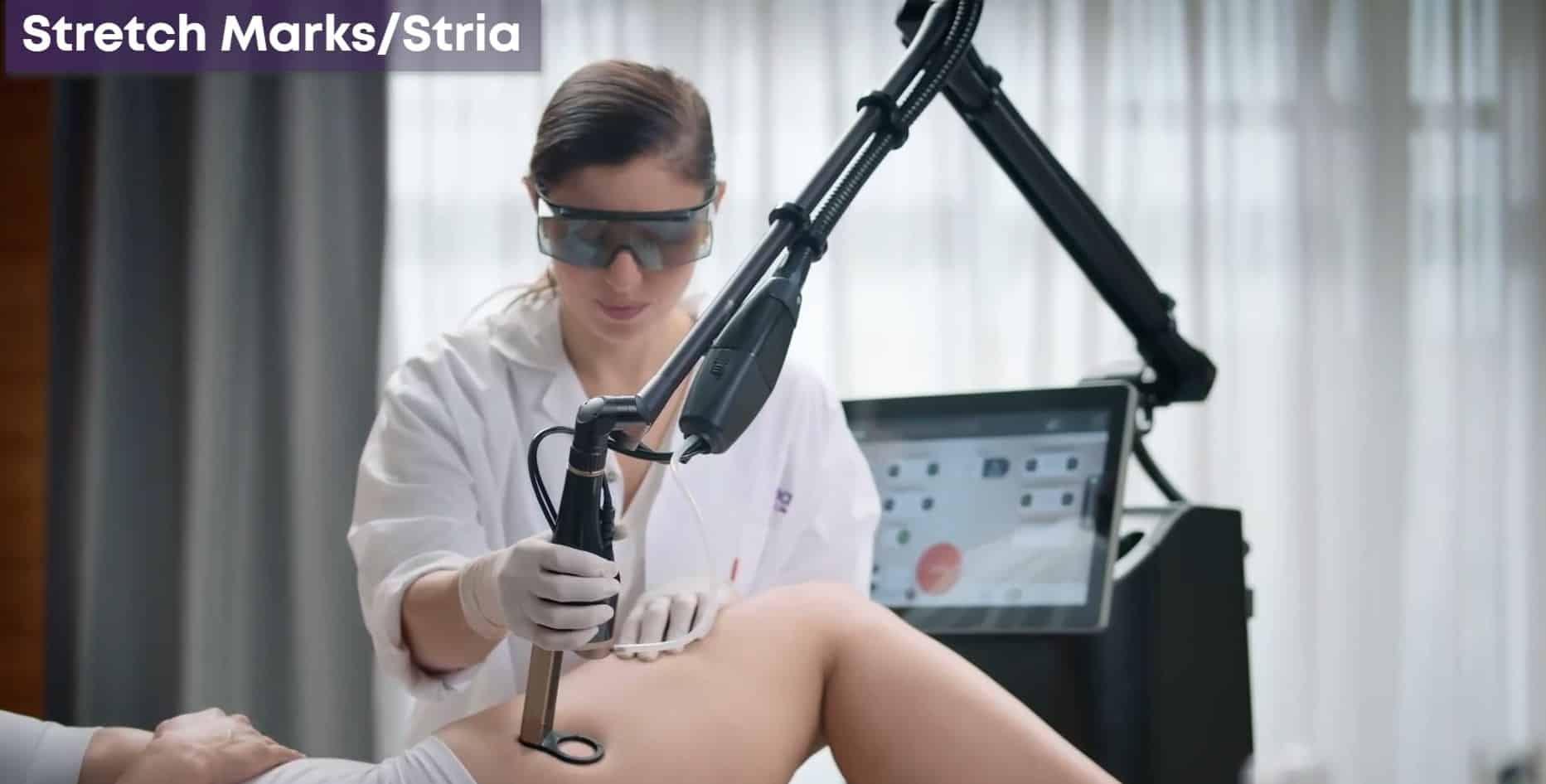
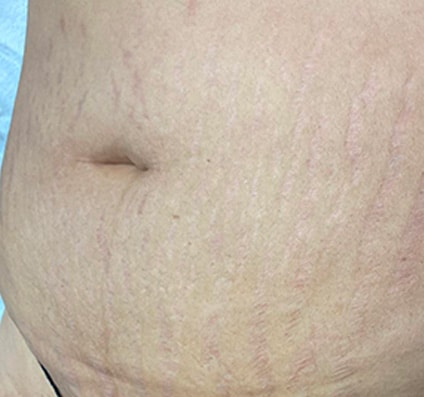
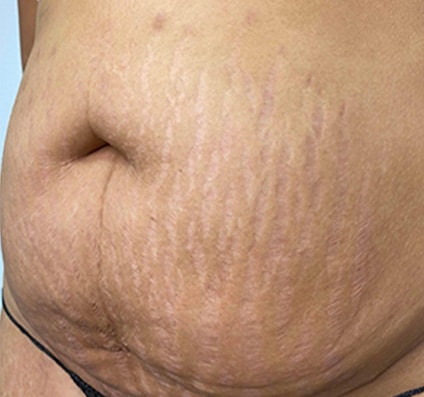
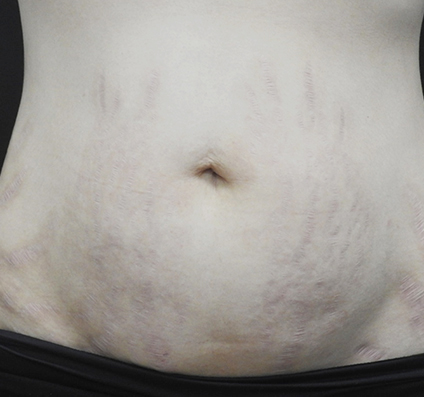
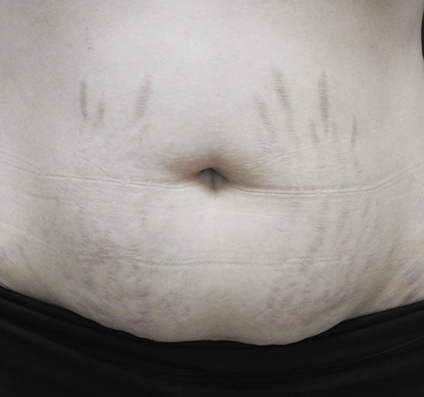
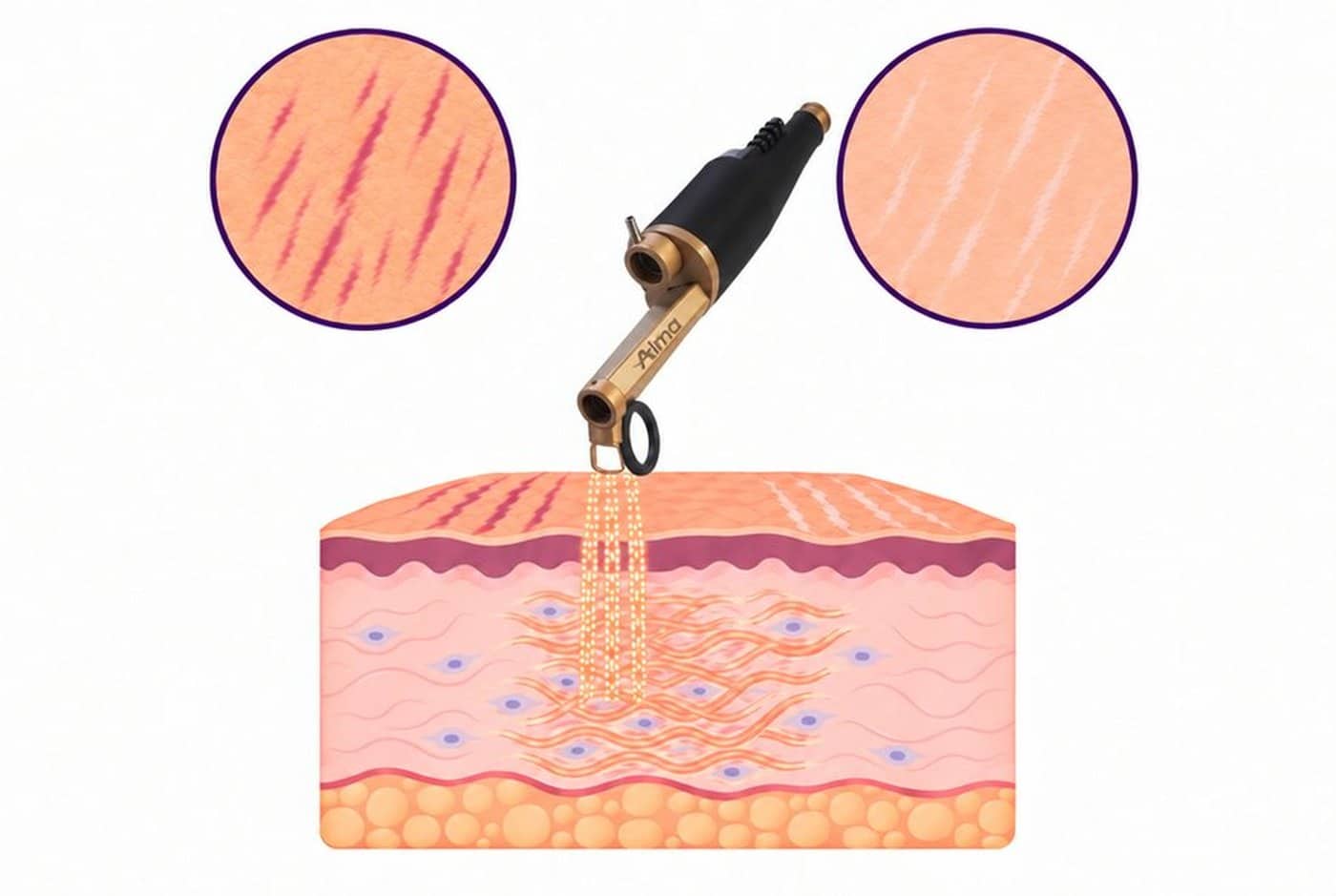
Stretch marks (striae) are scars in the dermis, formed when skin is stretched faster than its collagen and elastin can follow, during pregnancy, a growth spurt or a change in weight. They cannot be erased, but their texture and colour can be improved. Fractional laser treatment makes microscopic columns of treated tissue through the marks so the body lays down new collagen over the following weeks, which softens the edges and evens the surface. Red and purple marks are the most responsive, and older white marks still improve. Your clinic assesses your skin and sets the plan; results vary from person to person.
Which stretch marks respond, and to what
| Your stretch marks |
What usually helps |
Alma technology a clinic may use |
Downtime |
| Red or purple, recent (under a year) |
Treat early: colour and collagen respond best while the marks are still active |
Harmony XL Pro applicators for the colour; Alma Hybrid or Opus for the texture |
None to a few days |
| White or silvery, older |
Fractional resurfacing to rebuild texture and blend the edges |
Alma Hybrid (CO2 with 1570 nm) or Alma Pixel CO2 |
Several days to about a week at deeper settings |
| Marks on loose skin, after pregnancy or weight change |
Resurfacing for the marks plus firming for the skin around them |
Alma Hybrid or Opus, with PrimeX radiofrequency to firm |
Varies with the combination |
| Darker skin types |
Conservative fractional settings, usually a test patch first |
Alma Hybrid, with less surface ablation |
A few days |
How the laser treats a stretch mark
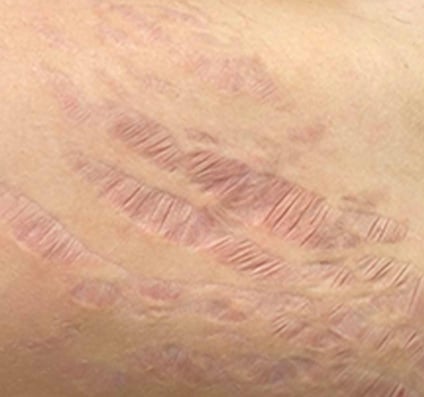
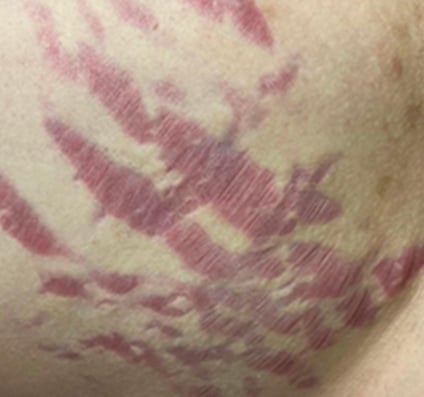
Red and purple marks are recent: the dermis is still inflamed and the collagen is still forming, so treating them early influences how they settle. White marks are mature scars with flattened collagen and less pigment, so the work is about rebuilding texture and blending the edge into the skin around it.
Alma Hybrid delivers ablative CO2 and non-ablative 1570 nm in the same pass, which lets the clinic reach the depth a mark needs while keeping more of the surface intact, so recovery is shorter. Alma Pixel CO2 performs the fractional CO2 pass on its own. For the colour in newer marks, Harmony XL Pro applicators are often used first, and PrimeX radiofrequency can firm the skin around the marks after pregnancy or weight change.
What the published study shows
Striae distensae, 2023
No adverse events observed
A clinical study evaluated the dual CO2 and 1570 nm laser on stretch marks for efficacy and safety, and reported improvement in the marks with no adverse events observed.
Striae distensae treatment: evaluating laser efficacy and safety, 2023. PubMed 37971397
Study results are not a prediction of results for any individual. More studies are on our clinical evidence page.
Stretch marks: questions patients ask
Can stretch marks be removed completely?
No treatment removes stretch marks completely. Alma treatments aim to soften texture, reduce colour and improve the look of the skin. Newer, red or purple marks generally respond better than older white ones.
Which Alma treatment is used?
Clinics use Alma Hybrid or Opus to resurface and stimulate collagen in the marks, Harmony XL Pro applicators for colour and texture, and PrimeX radiofrequency to firm the surrounding skin. The clinic chooses based on your skin and the age of the marks.
How many sessions?
Usually a course of three or more sessions spaced several weeks apart.
Is there downtime?
Depends on the treatment: none for radiofrequency, a few days of redness for Opus, up to a week for deeper Hybrid settings.
Does it hurt?
Resurfacing treatments are usually done with numbing cream and described as a hot, prickling sensation. Radiofrequency feels like deep warmth.
Can darker skin be treated?
Yes, with settings chosen for your skin type. Tell the clinic about recent sun exposure.
Where can I find a clinic near me?
Over 450 clinics across Australia and New Zealand use Alma technology. Tell us your suburb and treatment and we will point you to a clinic in your area.
This information is general in nature. Suitability, results and pricing are assessed and set by the treating clinic. Results vary between individuals.
Prepared by Alma Lasers Australia, the Australian subsidiary of the manufacturer, from the device documentation, the ARTG entries and the published studies listed on our clinical evidence page. It is general information, not medical advice; a consultation with a qualified practitioner comes first. Last reviewed September 2026.