Laser Treatment for Vascular Lesions

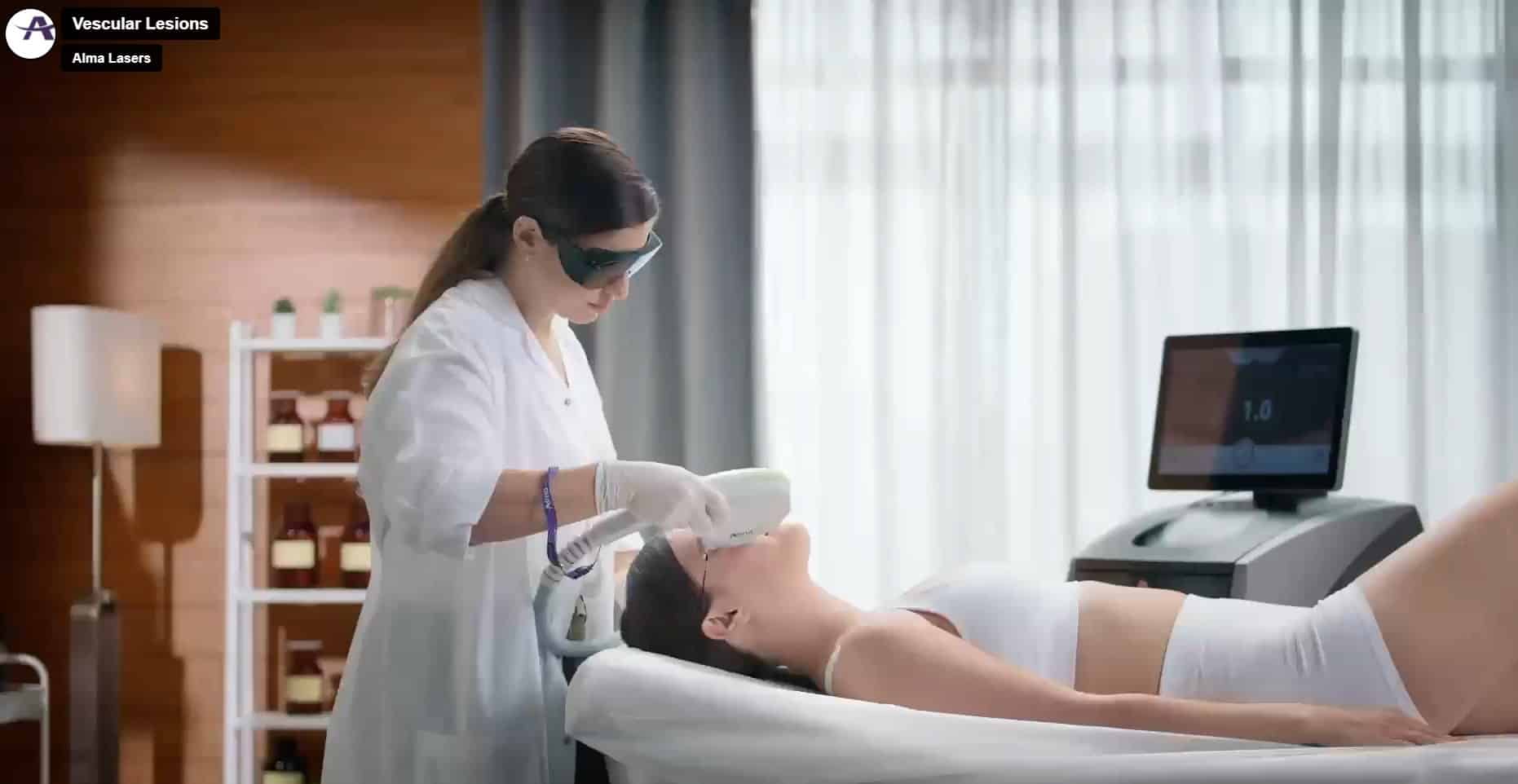
Iris Dye-VL on Alma Harmony is Alma's AFT (IPL) applicator for superficial vascular lesions, with the long-pulse 1064 nm ClearVas and VascuPen for individual vessels. Together they target telangiectasias, facial redness, cherry angiomas and leg veins across skin types.

Top Products

Iris Dye-VL: the power of light and heat

Iris Dye-VL, the AFT (IPL) applicator on Alma Harmony, is Alma’s first choice for diffuse redness and superficial vessels. Its narrow 500–600 nm band is absorbed by haemoglobin, so the light converts to heat inside the vessel, coagulates the blood and lets the body clear the lesion. For deeper or individual vessels, the long-pulse 1064 nm ClearVas and VascuPen applicators on the same platform complete the range.

B&A

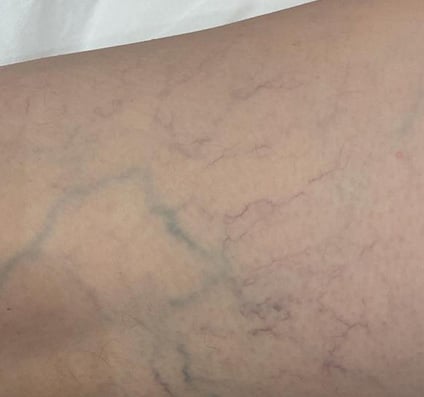
After Courtesy of Dr Andrea Taran, Romania
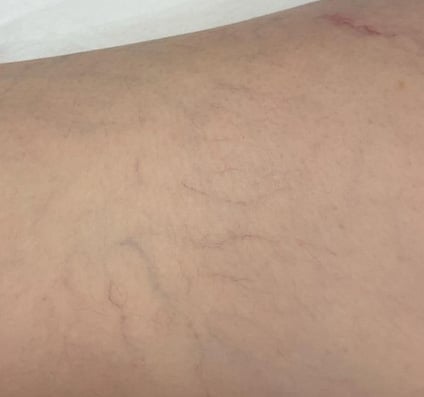
Before Courtesy of Dr Andrea Taran, Romania

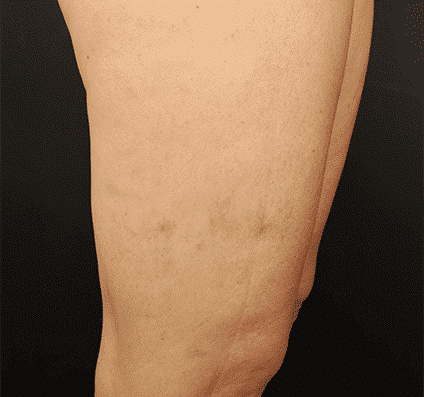
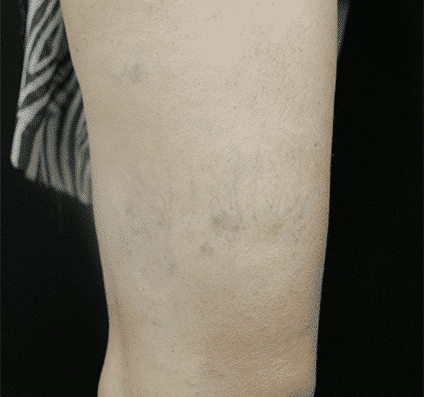
Superficial Leg Veins

Harmony XL Pro

Courtesy of Dr Andrea Taran, Romania

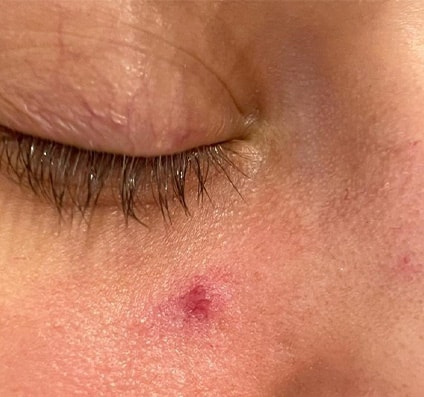
Cherry Hemangiomas after
Cherry Hemangiomas before

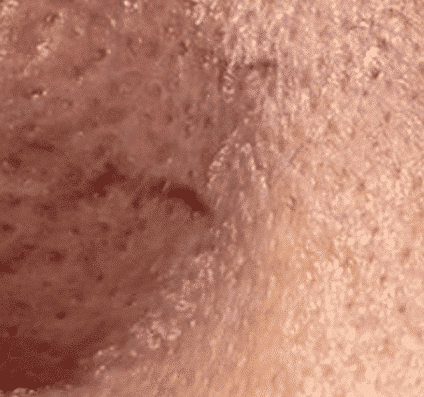
Cherry Hemangiomas

Harmony XL Pro

Courtesy of Dr Andrea Taran, Romania

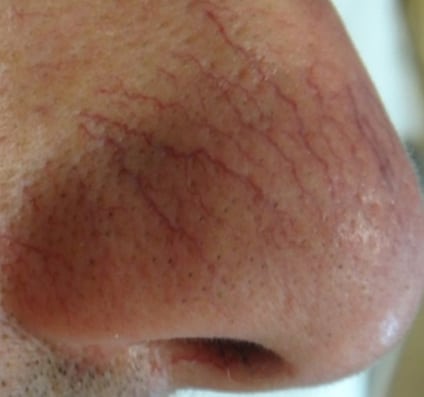
Spider Veins after
Spider Veins Before

Spider Veins

Harmony XL Pro

Courtesy of: Alma Clinical Department

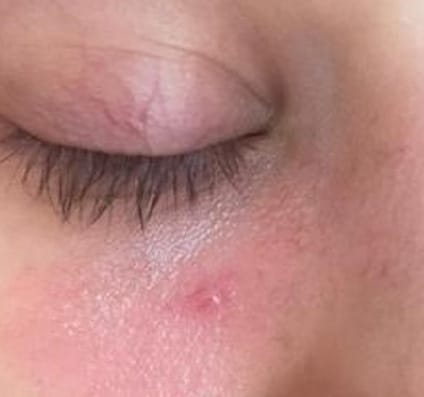
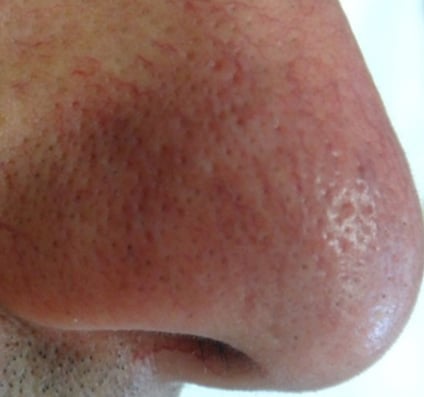
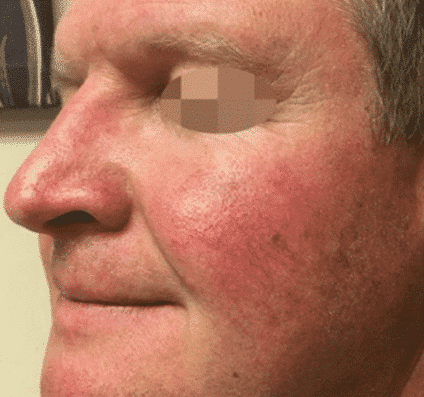
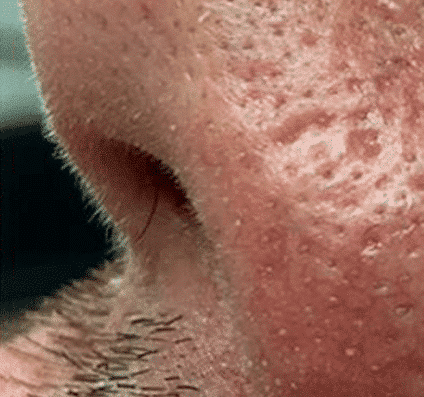
After Harmony Travis James DO MHS FAAD post 1 tx_nose

Vascular Lesions

Harmony XL Pro

Coutesy of:Travis James DO MHS FAAD
post 1 tx_nose

After Harmony Travis James DO MHS FAAD post 1 tx_nose
Travis James DO MHS FAAD post 1 tx_nose

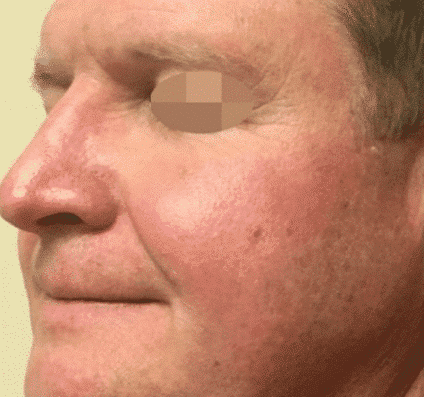
Vascular Lesions

Harmony XL Pro

Courtesy of: Travis James DO MHS FAAD
post 1 tx_nose

Vascular Lesions

Vascular Lesions

Harmony XL Pro

Alma Clinical Department

Indications

  • Telangiectasias

    These dilated or broken blood vessels near the surface of the skin are cleared with Iris Dye-VL, Alma's AFT (IPL) applicator on Alma Harmony, or with a variable long-pulse Nd:YAG laser for individual vessels.
  • Cherry hemangiomas

    Consisting of clumped blood vessels, vascular proliferations known as cherry hemangiomas are very common on the body, especially as we age. They can be treated quickly and effectively with 1064nm laser.
  • Thin reticular veins (leg veins)

    Reticular veins are the visible veins below the skin with a blue-purple colored appearance, and a diameter of under 3mm. Occurring predominantly in the lower extremities, they can be treated safely and effectively with long-pulsed Nd:YAG laser (1064nm).

Choosing a vascular laser for your clinic

Vascular lesions clear by selective photothermolysis. You deliver light at a wavelength haemoglobin absorbs more strongly than the surrounding skin, with a pulse long enough to heat the vessel through but short enough that the heat does not spread. Get the wavelength or the pulse duration wrong and you either leave the vessel intact or you burn the skin above it.

Wavelength follows vessel depth and size

Oxyhaemoglobin absorbs strongly in the green-yellow range, around 540 to 580nm, and again, more weakly, near 1064nm. That gives you two working ranges and they do different jobs.

  • Fine superficial telangiectasia, facial capillaries and small spider veins respond to green light. Absorption is high, penetration is shallow, and precision matters more than depth.
  • Larger, deeper vessels, reticular veins and leg veins need 1064nm Nd:YAG. Absorption is lower, so you need more energy, but the light reaches vessels the green wavelengths never will.
  • Diffuse redness and rosacea is not one vessel, it is a field. Narrow-band IPL covers area efficiently where a pen-sized spot would take all afternoon.

What Alma puts on the platform

On Alma Harmony these are three applicators on one system rather than three machines:

  • VascuPen, a pen-shaped green diode laser for precise, comfortable treatment of superficial vascular and pigmented lesions.
  • ClearVas, long-pulsed 1064nm Nd:YAG. Absorption by haemoglobin combined with deep penetration makes it the workhorse for vascular lesions on the face and body.
  • Iris Dye-VL, a narrow-band IPL restricted to the wavelengths that melanin and haemoglobin actually absorb, which is what makes it usable on darker skin where broadband IPL is not.

Skin type changes the calculation

Melanin competes with haemoglobin for the same light. On Fitzpatrick IV to VI the epidermis absorbs a meaningful share of any green or broadband pulse before it reaches the vessel, which is where burns and post-inflammatory hyperpigmentation come from. Two things reduce that risk: moving to 1064nm, where melanin absorption is comparatively low, and using narrow-band rather than broadband IPL. Patch test and treat conservatively regardless.

What to compare before you buy

Ask four questions of any vascular device. Which wavelengths does it actually offer, not which indications are listed on the brochure. What spot sizes, because a 1mm pen and a 15mm handpiece are different businesses. How is the epidermis cooled during the pulse. And what happens when you need a second wavelength, which for most clinics is a year or two after the first purchase. A platform answers that with an applicator; a single-purpose machine answers it with another machine.

Who can operate one in Australia

Vascular lasers are Class 4 devices and the rules are set state by state rather than nationally. Some states require licensing or registration and a nominated laser safety officer; others rely on documented training and a written safety plan. Alma Lasers Australia takes each clinic through what applies in its state before installation, and every installation includes on-site clinical training. See laser and IPL regulations.

Buying from the manufacturer

Alma Lasers Australia is Alma’s own Australian subsidiary, not a reseller, and covers New Zealand from Sydney, so training, service and parts come from the team that sold you the system. We do not publish list prices, because the configuration depends on which applicators your clinic will use. Bring your treatment prices and weekly bookings to a demo and we will build the numbers with you. Equipment finance is available through Medfin.

Top Vascular Lesions Treatment Products

Alma Harmony pairs Iris Dye-VL AFT (IPL) with the long-pulse 1064 nm ClearVas and VascuPen for vascular lesions, from facial redness and telangiectasias to leg veins and spider veins. Harmony XL Pro offers Dye-VL and the same laser options, so clinics can treat vascular lesions across a range of skin types.
Treatment advantages bg

The Alma Advantage

  • SAFE TREATMENTS icon

    Safe treatments

  • MINIMAL PAIN icon

    Minimal pain

  • TARGETED TREATMENTS icon

    Targeted treatments

  • training support icon

    Training support

  • INNOVATIVE TECHNOLOGY icon

    Innovative technology

  • CLINICALLY PROVEN icon

    Clinically proven

  • MULTIPLE APPLICATORS icon

    Multiple applicators

Clinical Resources Relating to Vascular Lesion Clearance

  • Wesley J. Moy
    Lasers in Surgery and Medicine, 2015

    Read More
  • Huihui Gan
    Journal of Cosmetic and Laser Therapy, 2018

    Read More
  • Xinyao Zheng
    Journal of Cosmetic and Laser Therapy, 2018

    Read More

FAQs

  • Two wavelengths do most vascular work, and which one you reach for depends on how deep the vessel sits. Green light around 532 to 580nm is absorbed strongly by oxyhaemoglobin but penetrates only a short distance, which suits fine facial telangiectasia and small spider veins. Long-pulsed 1064nm Nd:YAG is absorbed less efficiently but reaches much deeper, which is what larger reticular and leg veins require. Diffuse redness and rosacea is a field rather than a vessel, so narrow-band IPL covers the area far more efficiently than a small spot. On Alma Harmony those are three applicators on one platform: VascuPen for precise superficial work, ClearVas for the deeper 1064nm treatments, and Iris Dye-VL for diffuse redness including on darker skin types.

  • AFT (Advanced Fluorescence Technology) is Alma’s form of IPL, delivered on Alma Harmony through the Iris Dye-VL applicator for pigmentation and vascular lesions (Dye-VL on Harmony XL Pro). A standard IPL flashlamp emits a broad spectrum and then discards the short wavelengths with a cut-off filter, which wastes energy and forces higher peak power to reach the target. AFT adds a fluorescent conversion layer that recycles those short wavelengths into the therapeutic band instead of discarding them, so more usable light reaches the target at lower peak power, with a flatter spectrum and consistent output pulse to pulse. Equal Distribution of Fluence holds the energy steady across the pulse rather than spiking at the start. Together these are what make Iris Dye-VL comfortable and repeatable across skin types I to VI. Alma Harmony is included in the ARTG (321320), with training and service from Alma Lasers Australia.

  • Yes. Intense pulsed light and long-pulsed 1064 nm Nd:YAG are the standard, extensively published technologies for vascular lesions, and Alma’s Dye-VL and Nd:YAG applicators on Harmony carry their own clinical studies. For the eye area, radiofrequency tightening and plasma resurfacing are both documented in peer-reviewed work, and Opus has published comparisons showing results equivalent to fractional ablative laser with shorter downtime. Harmony, Accent Prime and Opus are included in the ARTG, and Alma Lasers Australia supplies the references with training.

  • Two on the Harmony platform: Dye-VL, Alma’s AFT (intense pulsed light) applicator filtered to 500 to 600 nm for facial redness, rosacea, diffuse telangiectasia and port wine stains, and a long-pulsed 1064 nm Nd:YAG laser for deeper or larger vessels, leg veins and darker skin types where light-based treatment is unsuitable. Most Australian clinics run both from one Alma Harmony console: Dye-VL for the face at volume, Nd:YAG for the vessels Dye-VL cannot reach.

More Questions
Loading...