




Search demand for CO₂ laser treatments in Australia has increased by approximately 39% year-on-year, based on Google Trends data.
Patients are actively looking for resurfacing.
But most clinics are still facing the same problem:
They’re not converting that demand.
Why?
Because while patients want results…
They’re still hesitant about downtime, discomfort, and intensity.
The Problem Isn’t Demand. It’s Delivery.
Traditional CO₂ resurfacing has always worked.
But it often comes with trade-offs:
▸ Extended downtime
▸ Higher thermal spread (collateral damage)
▸ Patient hesitation and drop-off
That gap between interest and action is where opportunities are lost.
Enter a New Era: Alma Pixel CO₂ with PixelPeel™
Alma Pixel CO₂ isn’t just another resurfacing device.
It’s a rethink of how CO₂ should be delivered.
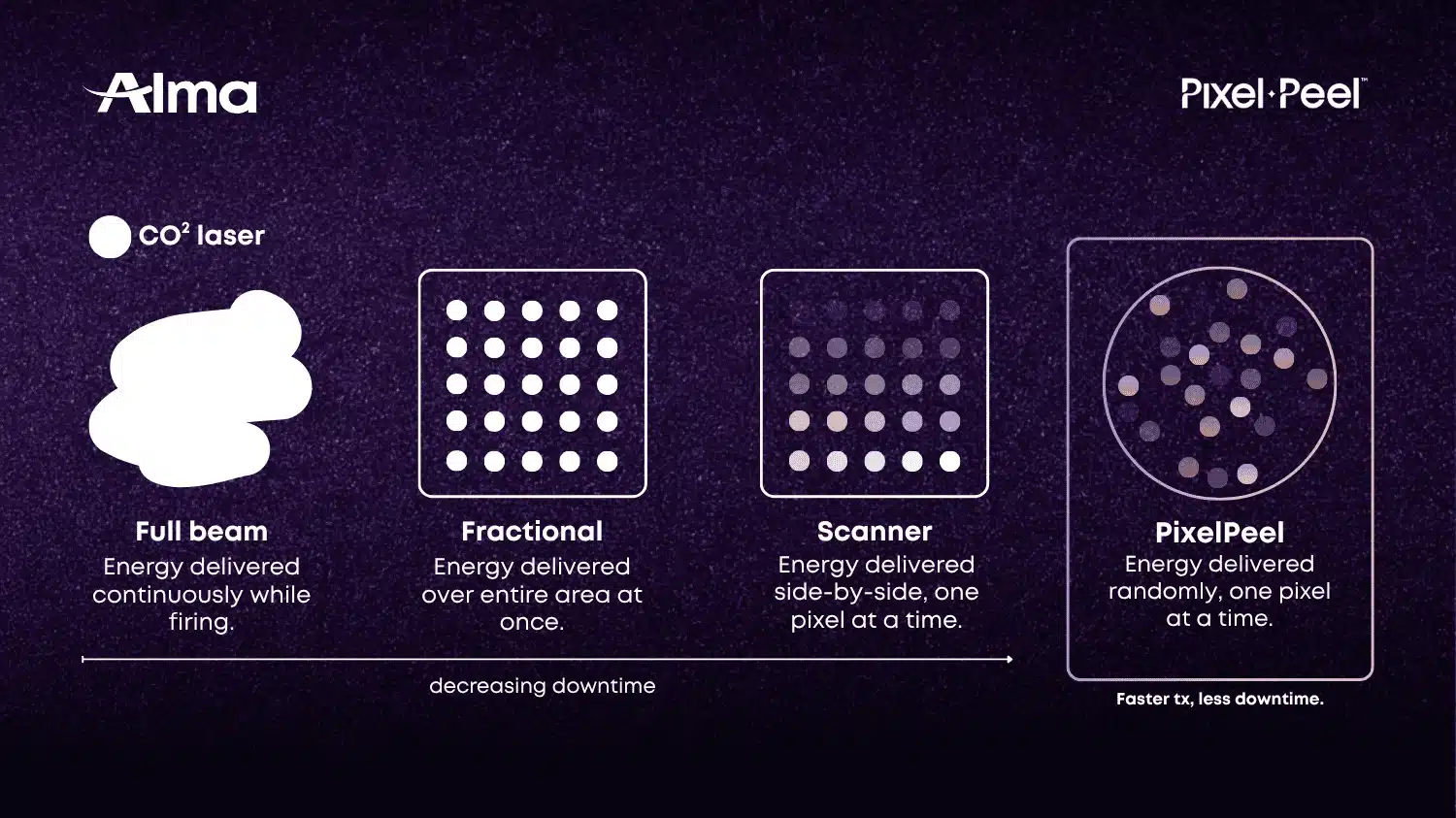
Instead of blanket, aggressive ablation, it uses fractional “pixelated” energy delivery—creating controlled micro-injury zones while preserving surrounding tissue.
The result is a more controlled, strategic approach to resurfacing.
Why Pixelated Delivery Changes Everything
By treating only a fraction of the skin at a time, Pixel CO₂ enables:
▸ Reduced collateral thermal damage
▸ Faster recovery pathways (intact tissue supports healing)
▸ Greater treatment flexibility across indications
This is what allows clinics to shift from high-risk, high-downtime treatments → controlled, adaptable protocols.
PixelPeel™: The Missing Piece in CO₂ Adoption
PixelPeel™ is where conversion happens.
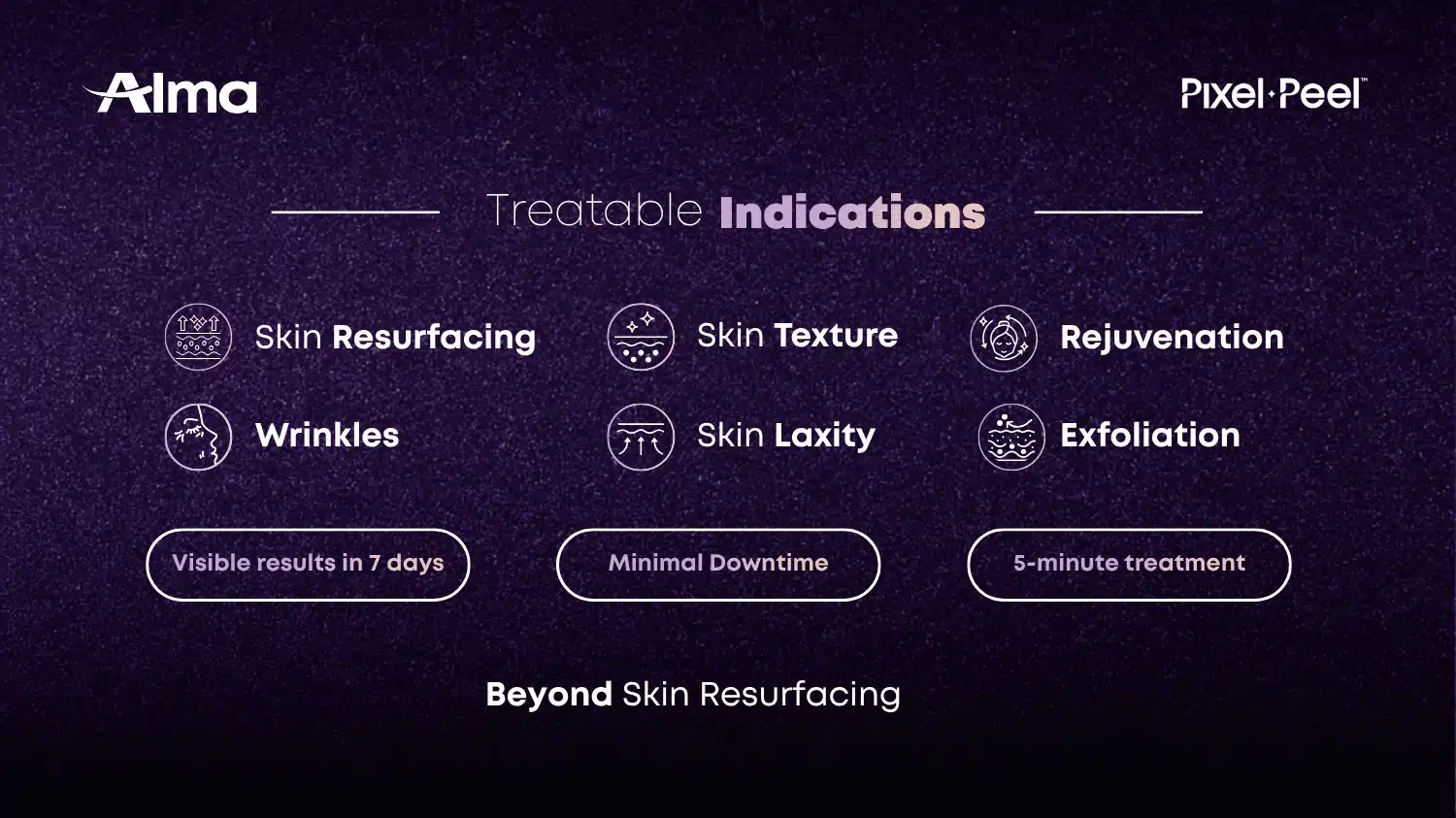
It’s designed as a low-parameter CO₂ treatment that delivers visible skin refinement—without the intensity patients often associate with traditional resurfacing.
What makes PixelPeel™ different:
▸ Short pulse durations + controlled energy delivery
▸ Supports lower heat accumulation in the surrounding tissue
▸ Treatment profiles associated with reduced downtime*
▸ Quick, efficient treatments that fit into modern clinic workflows
The Commercial Advantage: Capturing Demand You’re Missing
That 39% YoY growth isn’t just a statistic.
It represents patients who are:
▸ Searching
▸ Researching
▸ Considering treatment
But not booking.
PixelPeel™ gives you a way in.
Instead of asking patients to commit to aggressive resurfacing upfront, you can offer:
▸ A starting point
▸ A progressive treatment journey
▸ A lower psychological barrier to entry
From One-Off Treatments → Lifetime Skin Strategy
This is the real shift.
CO₂ is no longer just:
× A once-a-year, high-downtime procedure
It becomes:
✓ A tiered, repeatable treatment pathway
▸ Entry: PixelPeel™
▸ Progression: Moderate resurfacing
▸ Advanced: Deep correction (scars, wrinkles, laxity)
This improves:
▸ Patient compliance
▸ Retention
▸ Lifetime value
What This Means for Patients
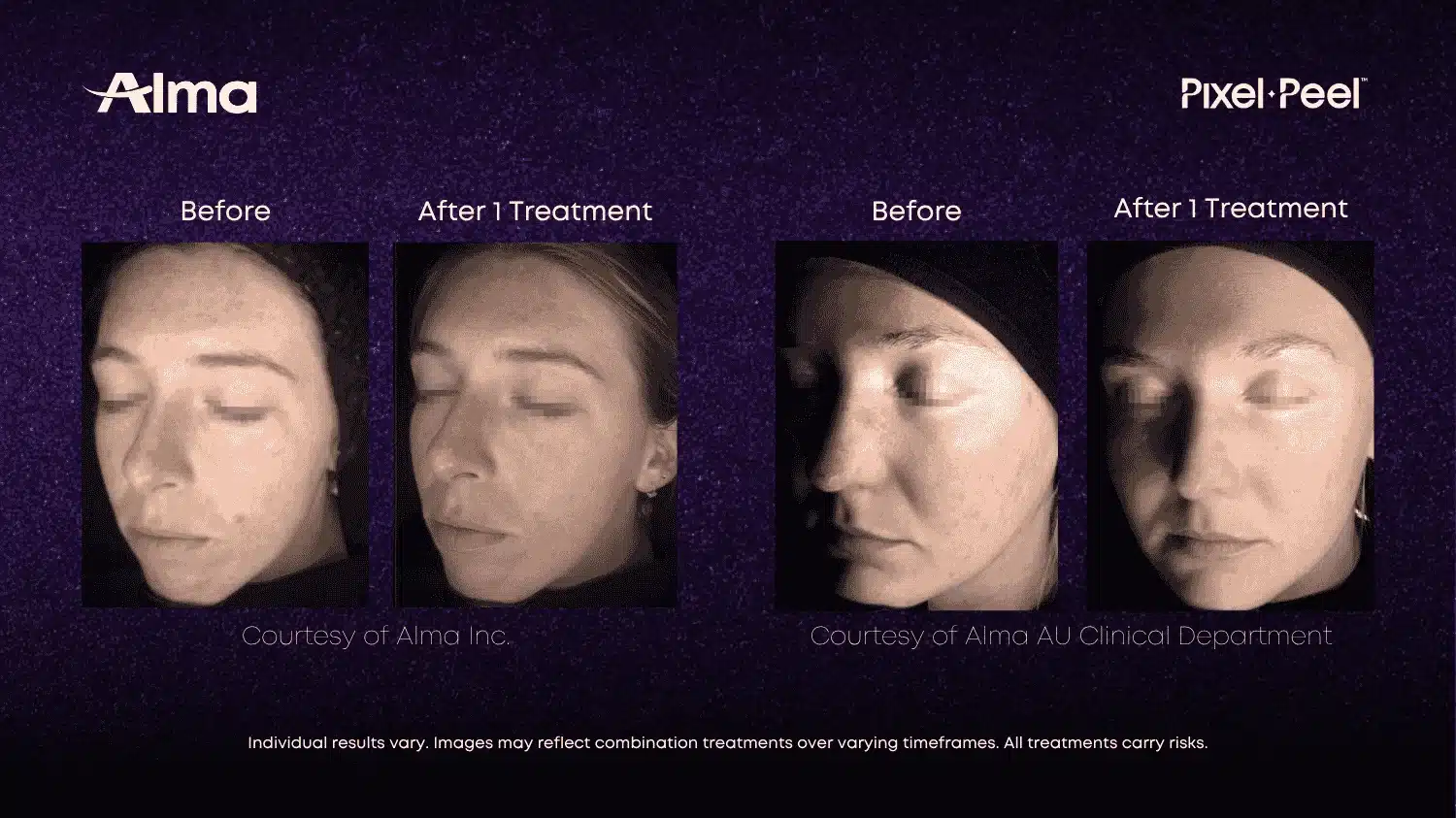
Patients don’t think in wavelengths or fluence.
They think in:
❒︎ “How long will I be out for?”
❒︎ “Will I look scary after?”
❒︎ “Is there something gentler?”
With Pixel CO₂, the conversation changes:
Instead of:
❌“This is a big resurfacing treatment”
You can say:
✅“We can start lighter and build your results over time”
Final Thought: The Clinics That Win Will Be the Ones That Adapt
Demand for CO₂ resurfacing is rising.
But patients are choosing clinics that offer:
❒︎ Flexibility
❒︎ Personalisation
❒︎ Realistic recovery
Alma Pixel CO₂ with PixelPeel™ bridges that gap.
The Opportunity
The demand is already there.
The only question is:
Is your clinic positioned to capture it?
As demand for CO₂ laser treatments continues to rise in Australia, clinics that offer flexible, low-downtime solutions are better positioned to convert patient interest into bookings. Partnering with Alma Lasers and adopting Alma Pixel CO₂ with PixelPeel™ enables clinics to deliver effective resurfacing treatments with greater patient acceptance and workflow efficiency.
To explore how this solution can support your clinic’s growth, get in touch with our team today.
References
– Source: Google Trends, Australia, 2025–2026. Search interest for “CO2 laser” and related terms.
– Downtime and recovery vary depending on treatment parameters and individual response
– “Reduced collateral damage” refers to fractional delivery vs traditional fully ablative approaches at comparable treatment intensities.