Which pigmentation treatment should I have?
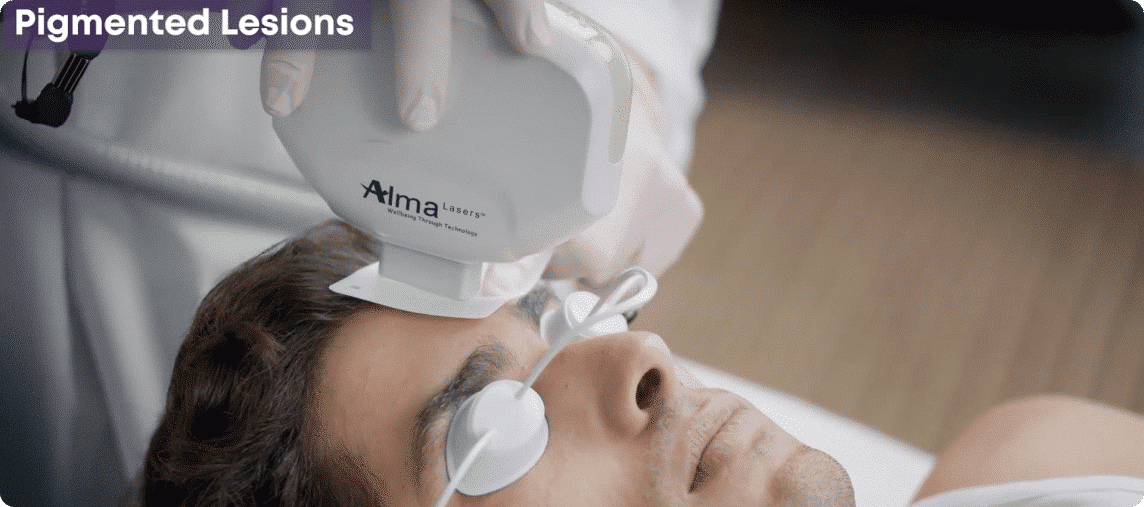
The right pigmentation treatment depends on what kind of pigment it is (sun spots, freckles, age spots, post-inflammatory marks or melasma), how deep it sits, and your skin tone. Australian clinics using Alma technology choose between three approaches, and often combine them.
| Approach |
Best for |
What happens |
Typical downtime |
Alma option |
| Narrowband light (Dye-VL, an advanced form of IPL) |
Sun spots, freckles, age spots and redness on lighter skin tones |
Pigment absorbs the light, darkens for a few days, then flakes away |
About 3 to 7 days of darkened spots, no wound |
Dye-VL on Alma Harmony XL Pro |
| Q-switched 1064 nm laser (ClearLift) |
Deeper or dermal pigment, uneven tone, and darker or olive skin where light-based treatment carries more risk; used cautiously for melasma |
Very short pulses break pigment into particles the body clears, without heating the surface |
Little to none; a course of sessions |
ClearLift on Alma Harmony XL Pro |
| Fractional resurfacing |
Pigment combined with texture, fine lines or scarring |
Renews the surface layer in a grid pattern |
About 3 to 7 days of redness and flaking |
Alma Hybrid or Alma Pixel CO2 |
| Melasma |
Hormonal, recurring pigment |
Low-energy laser passes plus daily sun protection and skincare; never a single aggressive treatment |
Minimal, but maintenance is ongoing |
ClearLift, with the plan set by the practitioner |
How to choose. Superficial sun damage on fair skin points to Dye-VL. Olive, brown or darker skin, or pigment that sits deeper, points to ClearLift, because it works without heating the surface. Melasma needs a cautious, ongoing plan rather than a quick fix, and daily SPF regardless of the device. A consultation with a test patch comes first; results vary and pigment can return with sun exposure.
Pigmentation treatment with Alma Harmony targets the excess melanin behind sun spots, freckles, age spots and uneven tone. Depending on the type and depth of pigment, the practitioner may use Dye-VL narrowband light, ClearLift Q-switched laser or a combination, and the pigment darkens briefly before it fades over one to two weeks. It is suitable for a wide range of skin tones when settings are chosen correctly, which is why a consultation comes first.
Pigmentation: questions patients ask
What types of pigmentation can be treated?
Sun spots, freckles, age spots and uneven tone respond well to Harmony XL Pro applicators such as Dye-VL and ClearLift. Melasma is more complex, tends to recur and needs a cautious plan; the practitioner will advise whether treatment is appropriate.
How does it work?
Light or laser energy is absorbed by excess melanin, which then breaks down and is cleared by the skin over one to two weeks. Alma Hybrid resurfacing is used when texture and sun damage need treating together.
How many sessions?
Commonly two to four sessions spaced about a month apart, then maintenance as needed.
Is there downtime?
Spots usually darken and flake off over a week. Redness settles within a day or two. Sun protection afterwards is essential.
Can darker skin be treated?
Yes, with applicators and settings chosen for your skin type. Test patches are common. Tell the clinic about recent tanning.
Will the pigmentation come back?
New spots can form with sun exposure. Daily sunscreen protects the result.
Where can I find a clinic near me?
Over 450 clinics across Australia and New Zealand use Alma technology. Tell us your suburb and treatment and we will point you to a clinic in your area.
This information is general in nature. Suitability, results and pricing are assessed and set by the treating clinic. Results vary between individuals.
Prepared by Alma Lasers Australia, the Australian subsidiary of the manufacturer, from the device documentation, the ARTG entries and the published studies listed on our clinical evidence page. It is general information, not medical advice; a consultation with a qualified practitioner comes first. Last reviewed September 2026.