


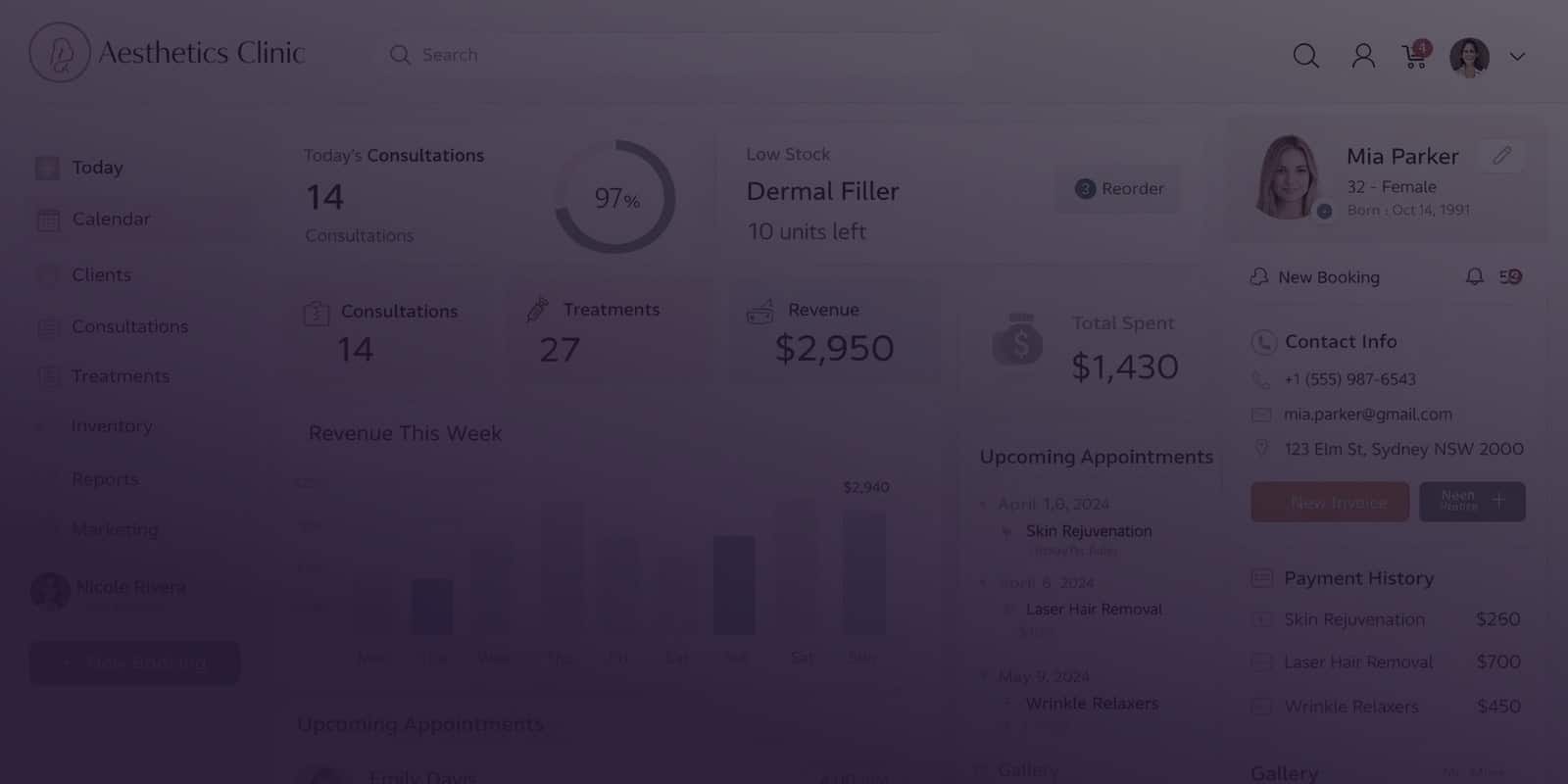


The eight features clinics search for most
Aesthetic clinic software is practice management software with a treatment room attached. When Australian clinic owners search for it, they are almost always asking about one of eight built-in features. Use this as a checklist when you compare vendors.
- Loyalty and rewards. Points, tiers or stored credit that apply automatically at checkout, not a spreadsheet the front desk has to remember.
- Treatment plans. Multi-session courses sold once and drawn down over months, with remaining sessions visible to the patient and the practitioner.
- Memberships. Recurring billing with automatic card retry, pause and cancellation handling.
- Consultation forms. Digital intake, consent and medical history captured before the appointment and attached to the patient record, with a clear audit trail.
- Reporting. Revenue by practitioner, by room, by treatment and by device, not just a daily takings total.
- Staff management and staff targets. Rosters, commission rules and individual targets that staff can see without asking a manager.
- Marketing. Recall campaigns, rebooking prompts and review requests triggered by treatment history rather than sent to the whole list.
- Stock and consumables. Per-treatment deduction, so margin is calculated after product cost.
The question the software cannot answer
Practice management software knows what you charged. It does not know what happened inside the device. It cannot tell you which applicator was used, at what energy, for how long, or whether a practitioner is running a protocol at settings that will disappoint the patient and cost you the rebooking.
That gap matters most in clinics that have invested six figures in a platform. Two therapists can bill the same treatment at the same price and produce different results, and nothing in your booking system will show you why. Device-level telemetry closes that gap. Alma Smart Clinic reports applicator use, treatment duration and energy levels per device, alongside which treatments and body areas are actually in demand, and it surfaces maintenance alerts and service requests from the same dashboard. It is not a replacement for clinic software. It answers the half that clinic software cannot see.
How to run the selection without losing three months
Most clinics choose badly because they run the process backwards, starting with demos instead of requirements. A faster order of operations:
- Write down your five non-negotiables first, from the list above, and refuse to be sold past them.
- Test the migration, not the interface. Ask each vendor to import a real export of your patient list, appointment history and outstanding treatment plans before you sign. Data that will not migrate is data you will re-key.
- Check who owns your data and how you get it out if you leave. Ask for the export format in writing.
- Price the whole thing, including per-user fees, payment processing rates, SMS costs and the annual increase.
- Talk to two clinics of your size using it now, not the reference the vendor chooses.
- Give it a fortnight in parallel before you switch off the old system.
Australian clinics should also confirm how the system handles privacy obligations for health records and how long data is retained.
Where Alma fits
Alma does not sell practice management software, and any vendor claiming their booking system will fix device utilisation is selling you the wrong thing. What we do is make the device side visible and make the clinical side repeatable: telemetry through Smart Clinic, objective imaging and treatment planning through Alma IQ, and on-site clinical training with every installation so protocols do not drift between practitioners.
If you are choosing software and a platform in the same year, sequence them. Get the clinical result reliable first, because software cannot market a treatment that does not consistently work. Then buy the system that reports on it. Talk to an Alma representative in Australia or New Zealand about how other clinics of your size have run that sequence.